Traveling internationally in 2026 is easier than ever, but staying connected abroad can still become expensive if travelers choose the wrong internet option. Many people continue relying on international roaming without realizing how quickly costs can increase during a trip. Others are now switching to eSIM technology because it offers more flexibility and better control over mobile data expenses.
Whether someone is traveling for business, family vacations, remote work, or short holidays, internet access has become essential for maps, transport apps, hotel bookings, and communication. Because of this, choosing between roaming services and a Travel eSIM is now an important part of travel planning.
This guide explains the differences between eSIMs and international roaming, compares costs in 2026, and helps travelers understand which option provides better value for travel in Europe and Asia.
What Is International Roaming?
International roaming allows travelers to continue using their home mobile network while visiting another country. Instead of purchasing a local internet package, users simply keep their original SIM card active abroad.
Although roaming sounds convenient, it is often one of the most expensive ways to stay connected during travel. Many travelers only realize the actual cost after returning home and receiving unexpectedly high bills.
Even moderate internet usage during vacations can increase roaming expenses quickly. Navigation apps, ride-booking services, social media browsing, video calls, and hotel communication all consume mobile data throughout the day. During multi-country trips, the total cost can rise even further depending on the traveler’s mobile provider.
What is a Travel eSIM?
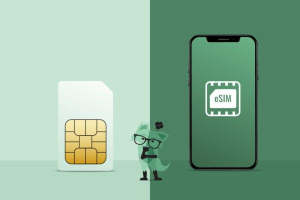
A Travel eSIM is a digital SIM card that allows travelers to activate internet plans online without inserting a physical SIM card into the phone. Most modern smartphones now support eSIM technology, including recent iPhone and Android models.
Instead of depending on roaming services, travelers can purchase destination-based or regional internet packages before departure. Activation usually takes only a few minutes through a QR code or mobile app.
One major advantage is convenience. Travelers no longer need to search for airport SIM vendors, replace physical SIM cards, or complete registration processes after landing.
Why Travelers Are Switching to eSIMs
The popularity of eSIM technology has increased rapidly because travelers now want simpler and more affordable connectivity options.
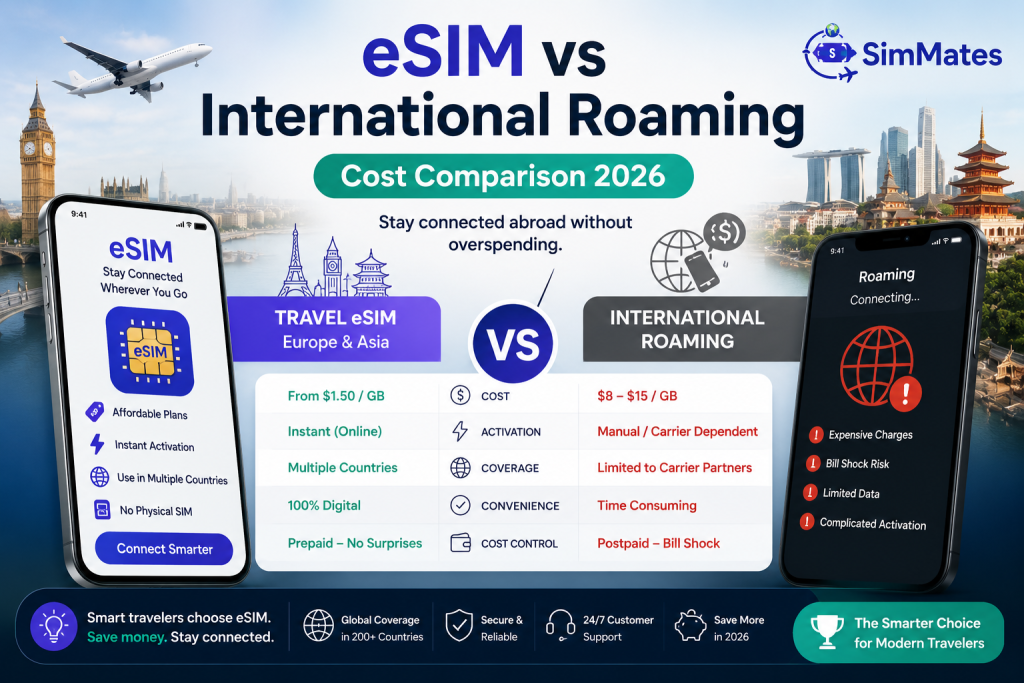
One major reason is pricing transparency. With roaming, many travelers remain uncertain about how much data they are consuming during the trip. A Travel eSIM provides clearer package limits and fixed pricing before travel even begins.
Another important reason is flexibility. Travelers visiting multiple countries can continue using the same internet package across several destinations instead of paying separate roaming fees repeatedly.
This becomes especially useful for travelers moving between European or Asian countries during one journey.
Cost Comparison: eSIM vs International Roaming
Roaming Costs in 2026
Roaming continues to be expensive for many destinations, particularly outside a traveler’s home region.
Imagine a traveler visiting Europe for one week. Throughout the trip, they regularly use maps, hotel apps, transport bookings, restaurant searches, and messaging services. Even normal daily usage can create high roaming charges without the traveler noticing immediately.
Some travelers try limiting internet usage while roaming to avoid higher bills, but this often affects convenience during the trip. Constantly turning mobile data on and off can make travel more stressful and less practical.
Travel eSIM Pricing in 2026
A Travel eSIM usually works through prepaid internet plans based on destination, duration, and data usage.
Travelers can choose plans according to their actual travel needs instead of relying on unpredictable roaming charges. Some providers offer country-specific packages, while others provide regional plans covering multiple countries under one package.
This gives travelers better control over travel expenses because internet costs are already known before departure.
For many tourists, students, and remote workers, that predictability becomes one of the biggest advantages of eSIM technology.
Travel eSIM Europe vs Roaming
Europe is one of the regions where travelers compare roaming and eSIM pricing most frequently.
Many tourists visit several countries during the same trip, such as France, Italy, Germany, Spain, or the Netherlands. Using roaming across multiple countries can become expensive quickly because mobile providers often apply separate international rates.
This is why Travel eSIM Europe packages have become increasingly popular. Instead of paying repeated roaming charges, travelers can activate one regional internet package covering several destinations.
For travelers spending two or three weeks across Europe, this approach is usually more affordable and far easier to manage.
Travel eSIM Asia vs Roaming
Asia is another region where eSIM demand continues to grow rapidly.
Travelers visiting Thailand, Japan, Indonesia, Singapore, Malaysia, or South Korea rely heavily on internet access throughout their journeys. Mobile data becomes necessary for transport apps, hotel communication, translation tools, online payments, and navigation.
Using roaming services across several Asian countries often becomes expensive, especially during longer trips.
A Travel eSIM Asia package allows travelers to activate affordable regional coverage before departure. This creates a more convenient experience because travelers remain connected across different countries without changing SIM cards repeatedly.
Real Example: Europe Travel Scenario
Imagine a traveler spending ten days across Paris, Rome, and Amsterdam.
If roaming remains active during the entire journey, internet charges may increase every day depending on usage habits and the traveler’s mobile provider.
However, with a Travel eSIM Europe package, the traveler knows the internet cost before departure. They can use maps, communication apps, ride-booking services, and social media more comfortably without constantly worrying about hidden roaming fees.
This creates a far more relaxed travel experience.
Real Example: Family Traveling Across Asia
Now imagine a family visiting Thailand, Singapore, and Indonesia during a holiday trip.
The family uses smartphones for navigation, restaurant searches, hotel bookings, and video calls with relatives back home. If every family member depends on roaming services, the total internet cost can become very high within days.
With a Travel eSIM Asia package, the family can activate internet coverage before departure and continue using mobile data across several countries without major interruptions.
For families traveling with children or elderly relatives, this convenience becomes especially useful.
Which Option Is Better for Frequent Travelers?
Frequent travelers usually prefer eSIM technology because it offers better flexibility and cost management.
Instead of purchasing local SIM cards repeatedly or worrying about roaming bills after every trip, users can activate internet packages digitally before departure.
This convenience is particularly useful for:
- Business travelers
- Remote workers
- Students studying abroad
- Digital nomads
- Multi-country tourists
For people who travel several times a year, reducing setup time and avoiding roaming complications makes international travel much easier.
Is Internet Speed Better on eSIMs?
Internet speed mainly depends on the local network provider rather than the eSIM technology itself.
Many Travel eSIM providers partner with major mobile networks in each destination to provide stable internet coverage for travelers.
In some situations, roaming services may even provide slower speeds because of international network limitations and agreements between operators.
Travelers should always compare provider quality, destination coverage, and customer reviews before purchasing a package.
Is eSIM Better Than Roaming in 2026?
For most travelers, yes.
International roaming still works, but it often creates uncertainty around pricing and internet usage. Many travelers become hesitant to use mobile data freely because they fear unexpectedly high charges later.
A Travel eSIM offers better pricing transparency, easier activation, and greater flexibility for international travel.
Travelers can activate packages digitally, manage internet expenses more effectively, and stay connected immediately after landing without depending on expensive roaming services.
Conclusion
Choosing between international roaming and a Travel eSIM in 2026 mainly depends on convenience, pricing, and travel habits. While roaming allows travelers to continue using their home network abroad, the overall cost can increase quickly during long trips or multi-country travel. Many travelers now prefer eSIM technology because it provides fixed pricing, simpler activation, and better control over mobile data expenses throughout the journey.
For travelers visiting multiple destinations, regional solutions such as Travel eSIM Europe and Travel eSIM Asia make international connectivity much easier to manage. Instead of worrying about hidden roaming charges or searching for local SIM vendors after arrival, travelers can activate internet packages before departure and stay connected immediately after landing. As international travel continues growing, eSIM technology is becoming one of the most practical and affordable ways to access mobile internet abroad.
FAQs
1. Is a Travel eSIM cheaper than international roaming?
In most cases, yes. A Travel eSIM usually offers lower and more predictable pricing compared to traditional roaming charges.
2. What is a Travel eSIM Europe package?
A Travel eSIM Europe package provides mobile internet coverage across multiple European countries under one regional plan.
3. Can I use one eSIM in multiple Asian countries?
Yes. Many providers offer Travel eSIM Asia plans that work across several countries within the region.
4. Do all smartphones support eSIM technology?
No. Travelers should check device compatibility before purchasing an eSIM package.
5. Is roaming still useful for travelers?
Roaming can still work for short trips or emergencies, but it is often more expensive than eSIM alternatives.
6. Can I activate a Travel eSIM before my flight?
Yes. Most providers allow travelers to activate their eSIM packages before departure, so internet access works immediately after landing.